A tape measure, a favourite piece.
Size letters change from one style to the next. Compare the actual measurements with something you already love wearing.
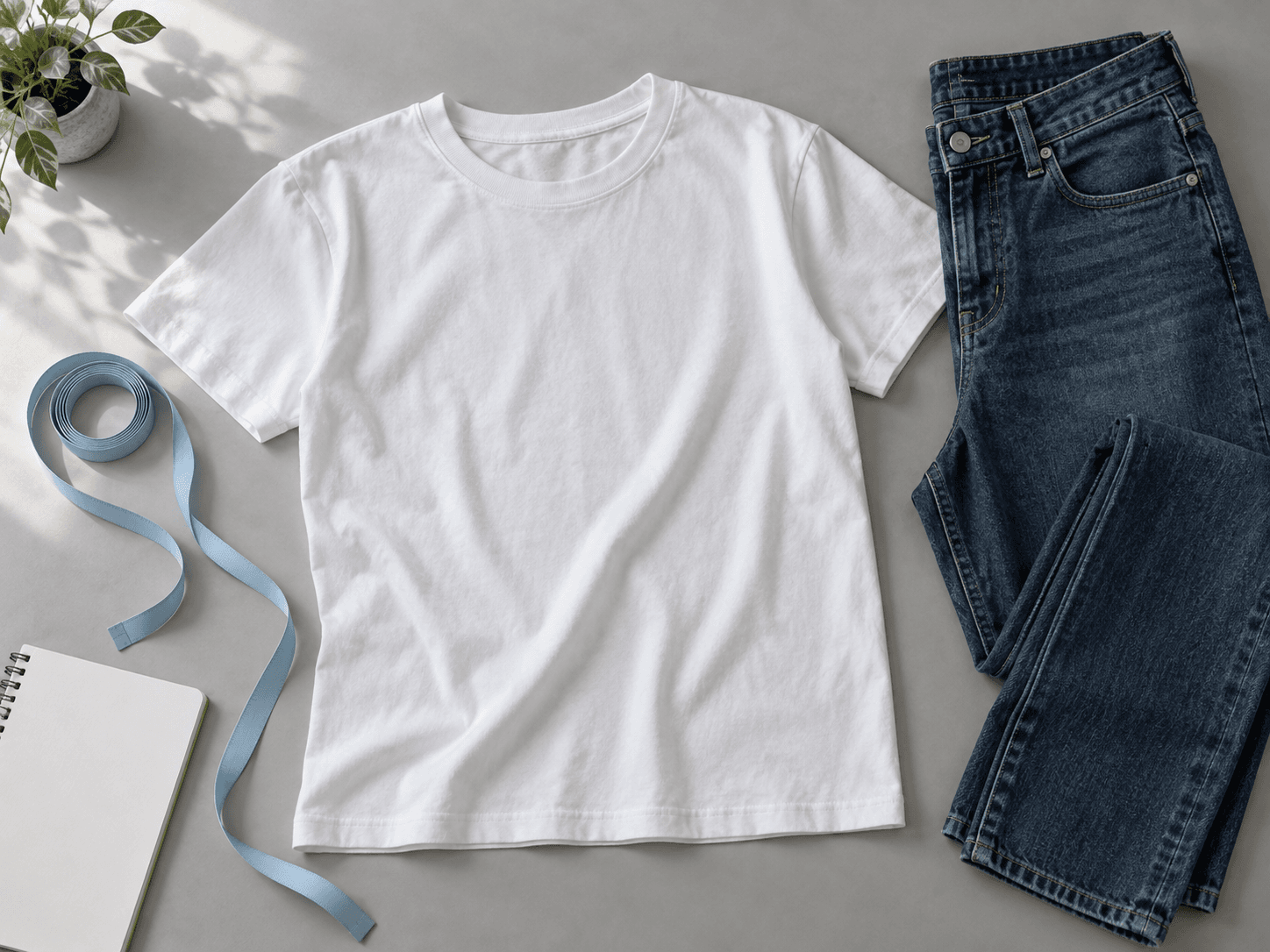
01Start with a piece you know
Choose a garment of a similar style and fabric that fits you comfortably. Lay it flat on a table, smooth out the creases and avoid stretching it. Body measurements and garment measurements are different, so check which one the product chart uses.
02Tops and dresses
Measure shoulder seam to shoulder seam. For chest width, measure straight across just below the armholes. For length, measure from the high shoulder point beside the neckline to the hem, unless the supplier specifies a different starting point.
03Trousers and skirts
Fasten the waistband and measure straight across it. Measure the widest part of the hips and the length from the top of the waistband to the hem. For trousers, inside-leg length is a separate measurement from the crotch seam to the hem.
04Compare the same measurements
A flat width is roughly half the garment circumference. Only double it when the chart calls for a circumference. For an elasticated waistband, look for both relaxed and stretched measurements. If only one is given, ask which it represents.
Before you choose a size
| On the size chart | What it means |
|---|---|
| Flat width | Measured straight across a flat garment, not all the way around. |
| Circumference | A measurement around the body or garment; check which the chart describes. |
| One size | One offered size, not a guarantee that it fits every body. Check the measurements. |
| 1 inch = 2.54 cm | Convert to the same unit before comparing. |
| Measurement tolerance | Use the tolerance listed by the supplier; it varies by garment and measuring method. |
Between sizes or missing a measurement?
Stretch, cut and your preferred fit all matter. Please ask us before ordering if the chart does not provide enough information. A styling image cannot confirm exact fit or measurements.
How to order and confirm the details →